Granite Workshop
A workshop and tuning system for FiveM servers, in development. The goal is to make vehicle work feel hands-on, consequential and diagnosable.
What it is
Granite Workshop is planned as a server-authoritative vehicle workshop where the work is visible in 3D and the vehicle remembers what happened to it.
Repairs are intended to use real tools — sockets, a torque wrench, a test light and an OBD reader. Every action is meant to change the vehicle’s real condition, so mistakes have consequences you can find in diagnostics.
What we are building first
- Hands-on 3D service work
- Repairs happen on the vehicle with tools you can pick up and use, with the work represented in the vehicle’s condition.
- Diagnostics that explain the fault
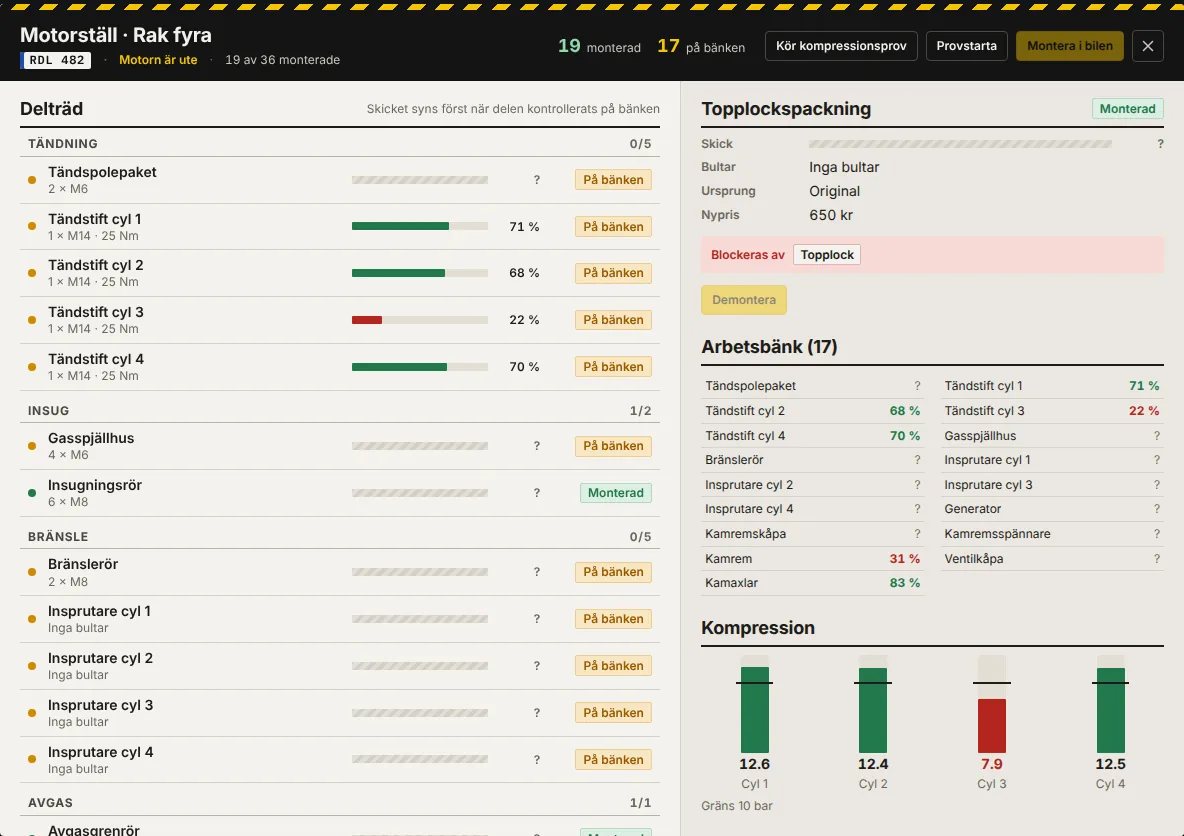
- Wear, fault codes and live data are planned to stay authoritative on the server, so diagnosis follows the actual state.
- A complete workshop flow
- The planned flow runs from intake to invoice, with service history that records what was done and why.
- Tuning and engine work
- Engine builds, ECU maps and dyno work are part of the intended workshop system.
Where it stands
Updated with each milestone. Work that still needs an in-game check says so.
1 built3 in progress4 planned
Server-side vehicle conditionBuilt
Wear, fault codes and repairs live on the server and survive restarts. Runs on our own server today.
Hands-on 3D scene engineIn progress
Server-owned steps, tools and gestures; first scenes are an oil change and fuse fault-finding. Tested offline, in-game check pending.
Engine teardown on the standIn progress
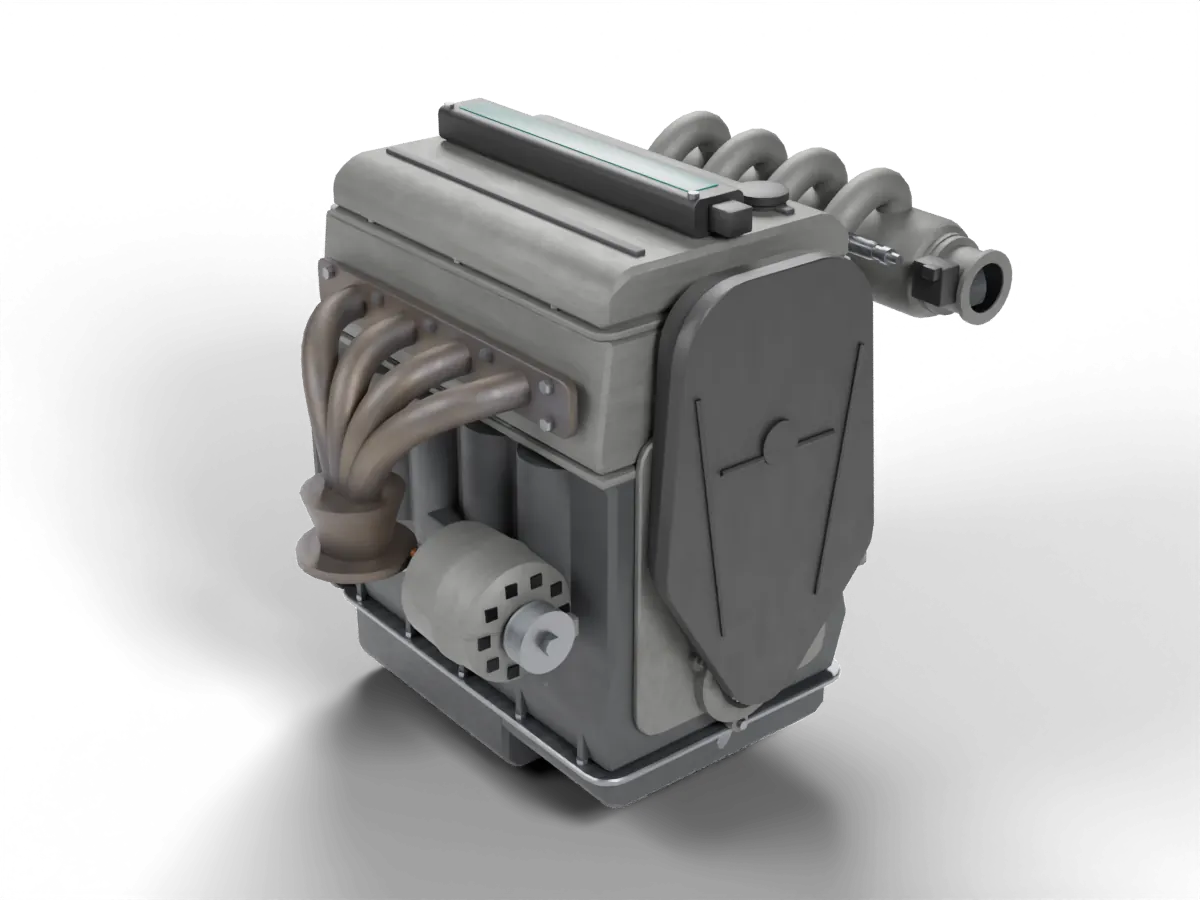
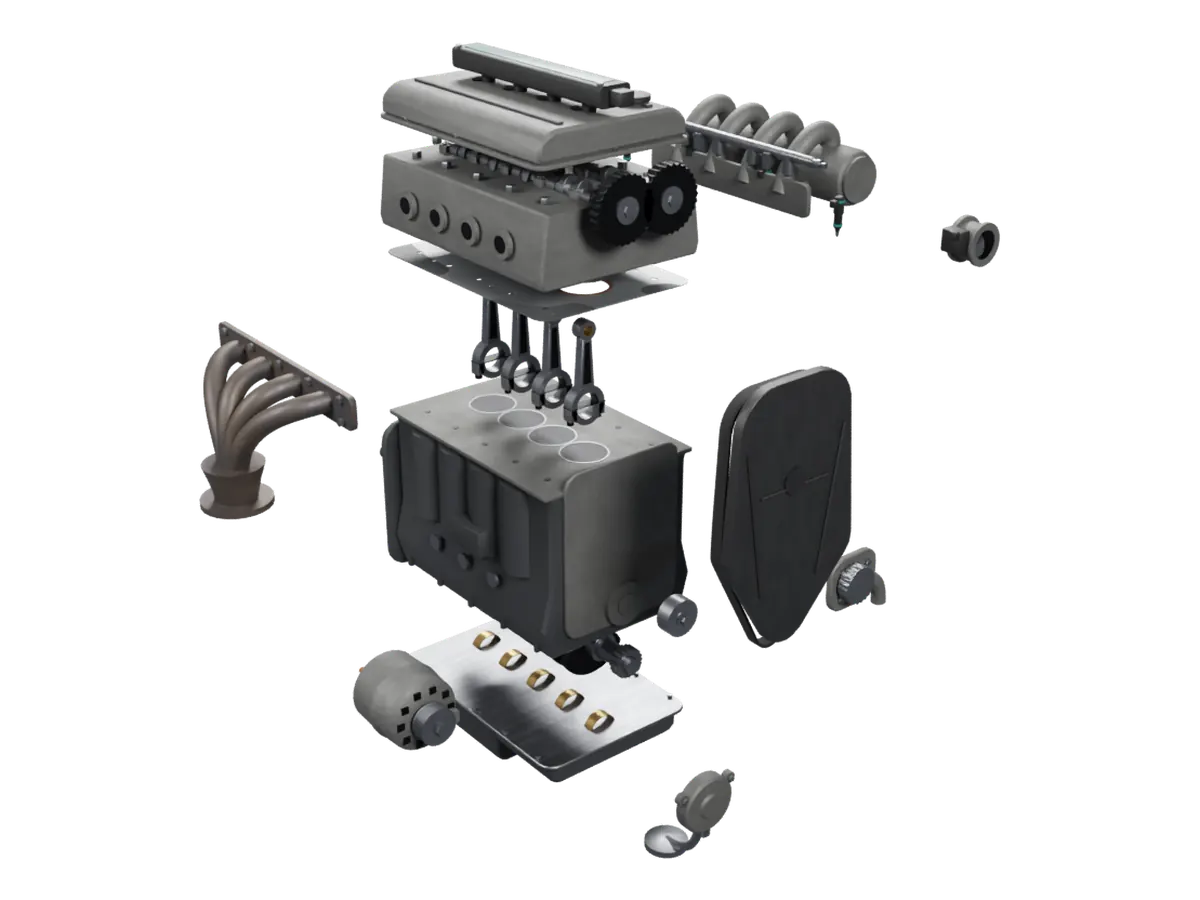
Inline-four with 36 removable parts and our own 3D models. Server logic tested offline, in-game check pending.
Framework bridgeIn progress
One bridge with adapters for ESX, QBCore and Qbox, plus inventory, target, keys and billing.
Framework matrix testingPlanned
Each framework and version tested and stated in the compatibility matrix.
Measured performancePlanned
Resource monitor figures from a real server, published with the method.
Install and configuration docsPlanned
Every server.cfg line, dependency and SQL file, versioned with the release.
Closed betaPlanned
A small group of servers before the public release.
The bar before release
We will not call this ready until we have done the work that makes a resource predictable to run and support:
- Test the framework matrix across ESX, QBCore and Qbox.
- Measure performance on a real server and publish the method with the results.
- Document installation, configuration, dependencies and upgrade steps.
- Run a closed beta before a public release.